






Student well-being priorities and effective strategies

ACUHO-I attendees share their top priorities and strategies
At the 2026 ACUHO-I conference, Treanor asked higher education housing and student life professionals about today’s evolving student needs. Participants in this informal survey were asked:
Given the evolving needs of today’s students:
- What are your top priorities for student well-being?
- Which strategies have worked best?
A total of 69 responses were collected. We found that “belonging & connection” and “mental health & emotional well-being” are the two dominant priorities, each appearing in approximately 51% of responses. However, when participants describe strategies that have worked, the emphasis shifts from services to relationships. Relationship-based and individualized engagement is the most frequently identified strategy, appearing in about 30% of responses.
These findings suggest that student well-being is understood less as a discrete service or program and more as an ecosystem of relationships, environments, resources, and institutional practices.
Survey topics and information collected
Treanor’s Higher Education design team conducted the informal survey at the 2026 ACUHO-I conference to better understand how higher education professionals are responding to the evolving well-being needs of today’s students.
The survey question covered two topics:
- Priorities: what do participants believe students need for well-being?
- Strategies: what approaches have participants found to be effective?
Because some people identified multiple needs and strategies within a single response, we coded their responses in all categories that were relevant. The resulting data represents the number of responses containing a particular theme, rather than mutually exclusive percentages.
Findings: student well-being priorities
Responses suggest that belonging is not viewed simply as a social outcome. It is closely connected to students’ perception that someone knows them individually and is available when they need support.
1. Belonging & connection
35 responses | 50.7%
Belonging and connection emerged as one of the two most prominent concerns. Responses emphasized:
- Sense of belonging
- Connection to others and to the university
- Inclusivity
- Meaningful relationships
- Having someone to talk to
- Knowing students personally
- Making campus feel like home
- Opportunities to gather and connect
Responses suggest that belonging is not viewed simply as a social outcome. It is closely connected to students’ perception that someone knows them individually and is available when they need support.
2. Mental health & emotional well-being
35 responses | 50.7%
Mental and emotional well-being was equally prominent. Participants identified:
- Mental health
- Counseling
- Wellness
- Emotional intelligence
- Self-care
- Stress management
- Healthcare access
- Safe living environments
- Trained residence life staff
The responses suggest a shift toward a more proactive model of mental health support, extending beyond traditional counseling centers into residence halls, programming, peer relationships, and everyday student interactions.
3. Safety & psychological security
14 responses | 20.3%
Safety emerged as a distinct concern, including:
- Safe spaces
- Safe living conditions
- Psychological safety
- Accommodations
- Accessibility
- Inclusive environments
- Responsibility and security
Safety was often mentioned alongside belonging in responses. Creating an environment where students feel secure was frequently described as important for connection and well-being.
4. Student success & engagement
13 responses | 18.8%
Participants also connected well-being to students’ ability to succeed academically. Responses included:
- Student engagement
- Student involvement
- Academic success
- Orientation
- Semester preparation
- Residential curriculum
- Goal setting
- Retention
This suggests that social, emotional, and academic dimensions of the student experience are interconnected with the goal of holistic student well-being.
5. Resource access & accommodations
9 responses | 13.0%
Participants emphasized that resources are only effective when students can identify and access them. Responses addressed:
- Resource awareness
- Knowing how to ask for help
- Accommodation requests
- Accessibility
- Bringing resources directly into residence halls
- Connecting students with appropriate support
A recurring issue was the gap between resources being available and students knowing how to access them.
6. Basic needs & financial well-being
8 responses | 11.6%
Responses identified fundamental needs as important contributors to well-being:
- Affordable housing
- Food insecurity
- Financial stress
- Financial literacy
- Transportation
- Ability to reduce work hours
- Basic-needs support
The responses reinforce the idea that student well-being cannot be separated from the conditions that enable students to remain enrolled and successfully complete their education.

Findings: strategies that have worked


1. Relationship-based & individualized engagement
21 responses | 30.4%
The most frequently identified effective strategy was intentional human connection. Examples included:
- Intentional conversations
- One-on-one meetings
- Wellness checks
- Knowing students by name
- Open-door policies
- Meeting students where they are
- Listening to individual student voices
- Building trust
- Peer connections
- Understanding individual circumstances
The responses repeatedly emphasize that effective support begins with relationships and trust.
2. Programming & engagement
16 responses | 23.2%
Participants identified programming as an important vehicle for connection and well-being. Effective approaches included:
- RA programming
- Intentional programming
- Wellness programming
- Low-barrier programming
- Low-stakes activities
- Residential curriculum
- Orientation
- Activities that encourage students to connect
Importantly, programming was often described not as an end in itself but as a mechanism for creating relationships and reducing barriers to engagement.
3. Physical environment & space
16 responses | 23.2%
The physical environment emerged as a significant strategy for supporting well-being. Participants identified:
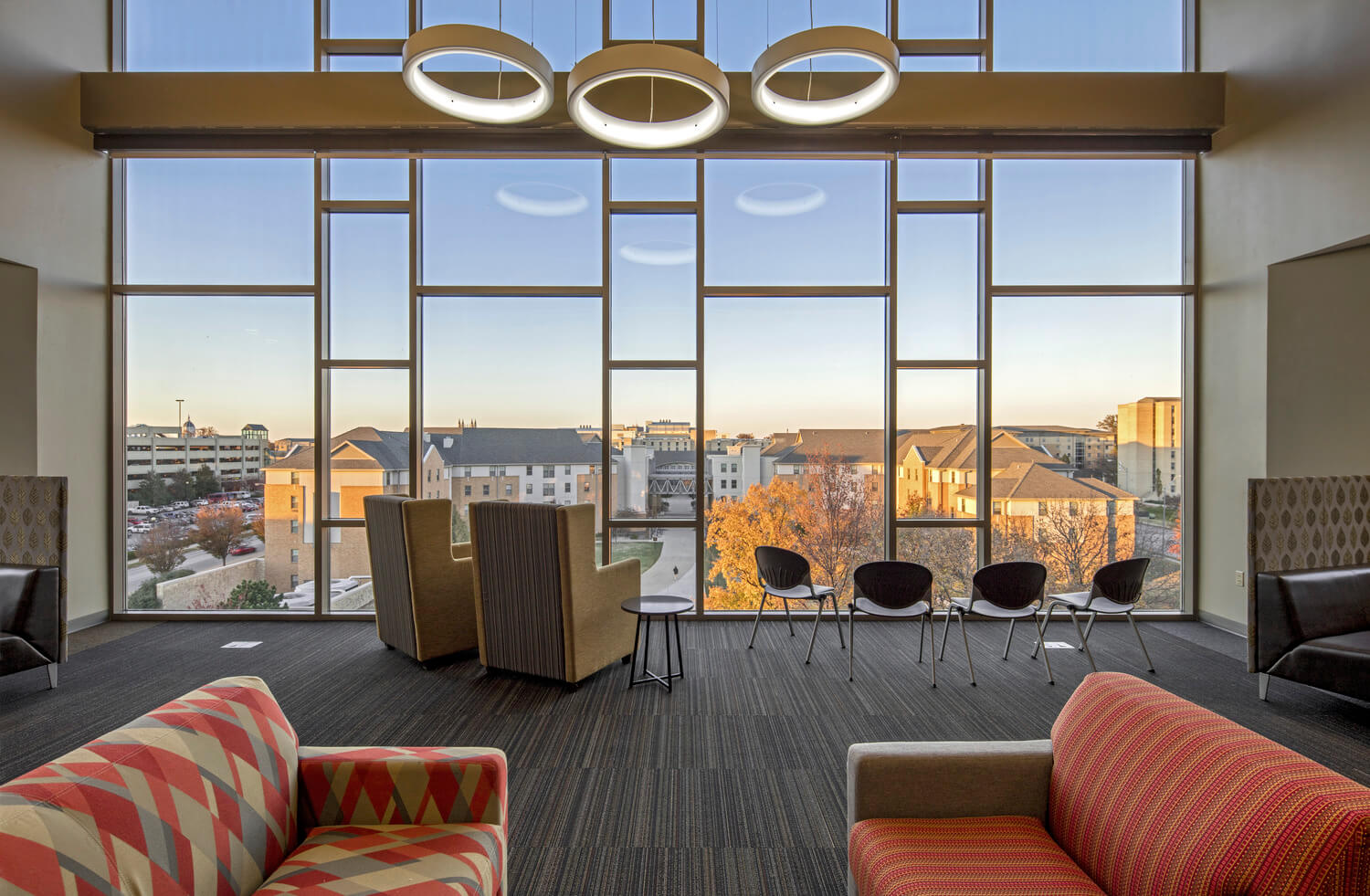
- Common spaces
- Gathering spaces
- Connected buildings
- Enclosed hallways
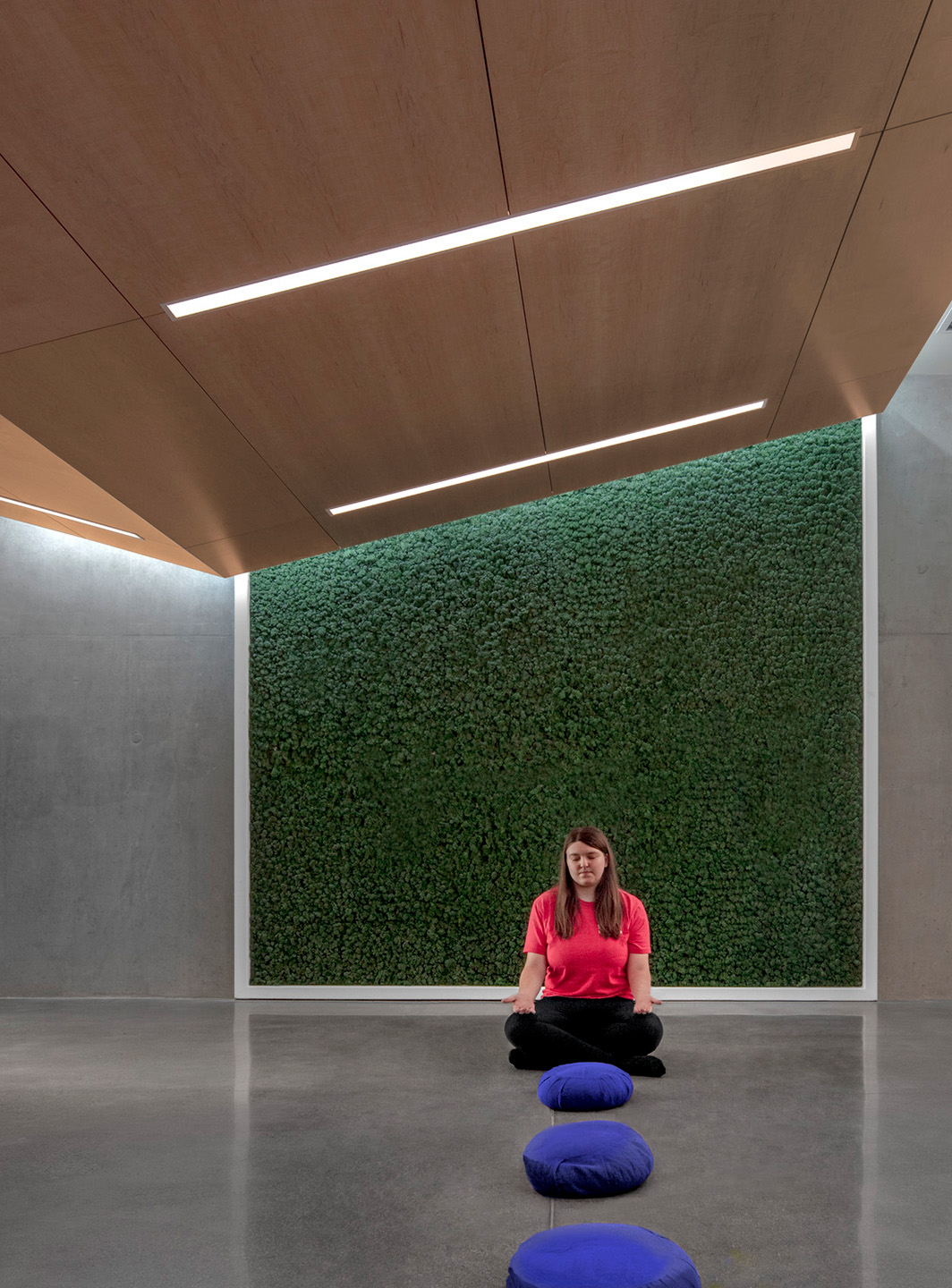
- Quiet spaces
- Sensory-friendly spaces
- Multipurpose spaces
- One-on-one conversation nooks
- Hubs within residence halls
- Study/therapy spaces
- Well-maintained facilities
A significant design implication emerges: the physical environment is primarily described as an enabler of well-being rather than as the outcome itself. Spaces are valued because they facilitate:
- Connection
- Conversation
- Belonging
- Privacy
- Reflection
- Access to support
4. Resource & basic-needs support
12 responses | 17.4%
Strategies included:
- Basic-needs partnerships
- Financial assistance
- Affordable housing
- Transportation assistance
- Financial literacy
- Resource awareness
- Bringing resources into residence halls
- Helping students understand how to access services
The emphasis is on reducing the friction between students’ needs and the resources intended to address them.
5. Staff & institutional practices
10 responses | 14.5%
Participants identified organizational practices that support student well-being, including:
- RA training
- Emotional intelligence
- Staff accountability
- Cross-departmental collaboration
- Health promotion initiatives
- Residential curriculum
- Orientation
- Data and resource sharing
These responses demonstrate that student well-being is not solely a student affairs function. It requires coordination across departments and levels of the institution.
6. Embedded health & counseling support
7 responses | 10.1%
Participants identified several strategies that bring professional support closer to students:
- Counselors in residence
- Counseling center participation in resident events
- On-site vendor counseling
- Online therapy
- Healthcare in residence halls
- Remote therapy spaces
The responses suggest growing interest in bringing services to students rather than expecting students to navigate to services.
7. Inclusive & accessibility practices
3 responses | 4.3%
Although less frequently mentioned as a standalone strategy, inclusivity and accessibility are important cross-cutting considerations within the responses. Participants emphasized creating environments where students with different identities, abilities, and access needs can participate fully and feel they belong.
Strategies included:
- Meeting student accommodation requests so they feel comfortable, safe, and set up for success
- Affordable housing, accessibility, equity
- Making every student, regardless of identities, mental health, states, or access needs, feel like they belong
The responses suggest that inclusion is not simply an accommodation or compliance issue. Rather, it is connected to belonging, safety, comfort, and student success.

Key takeaways
1. Belonging and mental health are the dominant priorities.
Both themes appeared in 35 of 69 responses (50.7%), making them the two most prominent concerns identified by participants.
2. Relationships are the most frequently cited effective strategy.
21 responses (30.4%) identified relationship-based or individualized engagement, making it the strongest strategy category.
3. Well-being is increasingly proactive rather than reactive.
The responses emphasize wellness checks, intentional conversations, programming, trained staff, embedded counselors, and resource awareness—not simply responding when students reach a crisis point.
4. The physical environment is an enabler of well-being.
16 responses (23.2%) identified space or the physical environment as part of an effective strategy. The emphasis was on environments that facilitate connection, privacy, gathering, reflection, and access to support.
5. Students need help navigating the support ecosystem.
Resource access, accommodations, basic needs, and financial support are recurring themes throughout the responses. Availability of student support services does not necessarily translate into access. Awareness, proximity, trust, and ease of access are important to a successful support ecosystem.
6. Student well-being is interconnected with student success.
Engagement, academic preparation, retention, financial stability, belonging, and mental health are repeatedly connected rather than treated as separate issues.
Availability of student support services does not necessarily translate into access. Awareness, proximity, trust, and ease of access are important to a successful support ecosystem.
The role of the physical environment
The findings are particularly relevant to designing student life environments. Physical environment and space appeared in 16 responses (23.2%) as a strategy. However, participants rarely described physical space as the ultimate objective.
Instead, space was described as a means of enabling:
Space → Interaction → Connection → Belonging → Well-being
Examples include:
- Common spaces → opportunities to gather
- Conversation nooks → intentional one-on-one relationships
- Connected buildings → meaningful connections
- Quiet/sensory spaces → emotional regulation
- Residence hall hubs → resource access and community
- Multipurpose spaces → flexible engagement
This suggests a shift in the design question from “what wellness spaces should be provided?” to “what behaviors and relationships should the environment enable?”
This distinction is important for evidence-based student life design. Considering intended outcomes before imagining a space with walls intact helps focus your priorities and narrow the scope of your physical environment’s needs to the strategies that will be most successful for your campus.
Implications for student life design

Conclusion
The responses collected by Treanor at the 2026 ACUHO-I conference reveal a consistent understanding of student well-being as relational, environmental, and holistic.
Belonging and mental health emerge as the dominant priorities, each appearing in approximately half of the responses. Participants most often describe intentional relationships, individualized attention, and meaningful connection as effective approaches to these priorities.
The physical environment plays an important supporting role. Spaces are valued not simply because they are designated as “wellness spaces,” but because they enable the behaviors that contribute to well-being: conversation, connection, gathering, privacy, reflection, and access to people and resources.
Taken together, the findings point toward a broad definition of student well-being: an ecosystem in which relationships, physical environments, resources, programming, and institutional practices work together to create belonging, support mental health, promote safety, and enable student success. For student life design, this means we should design for the conditions that make well-being possible, not simply for spaces labeled as “wellness.”
How to elevate student spaces on your campus
Treanor’s student life team helps clients support students through outcomes-focused design strategies that fit your unique campus.
Authors

Related content
Stay on the leading edge
Stay up to date on emerging trends, research, hot topics, and more delivered conveniently to your inbox.
"*" indicates required fields