



Douglas County Judicial & Law Enforcement Center Renovation
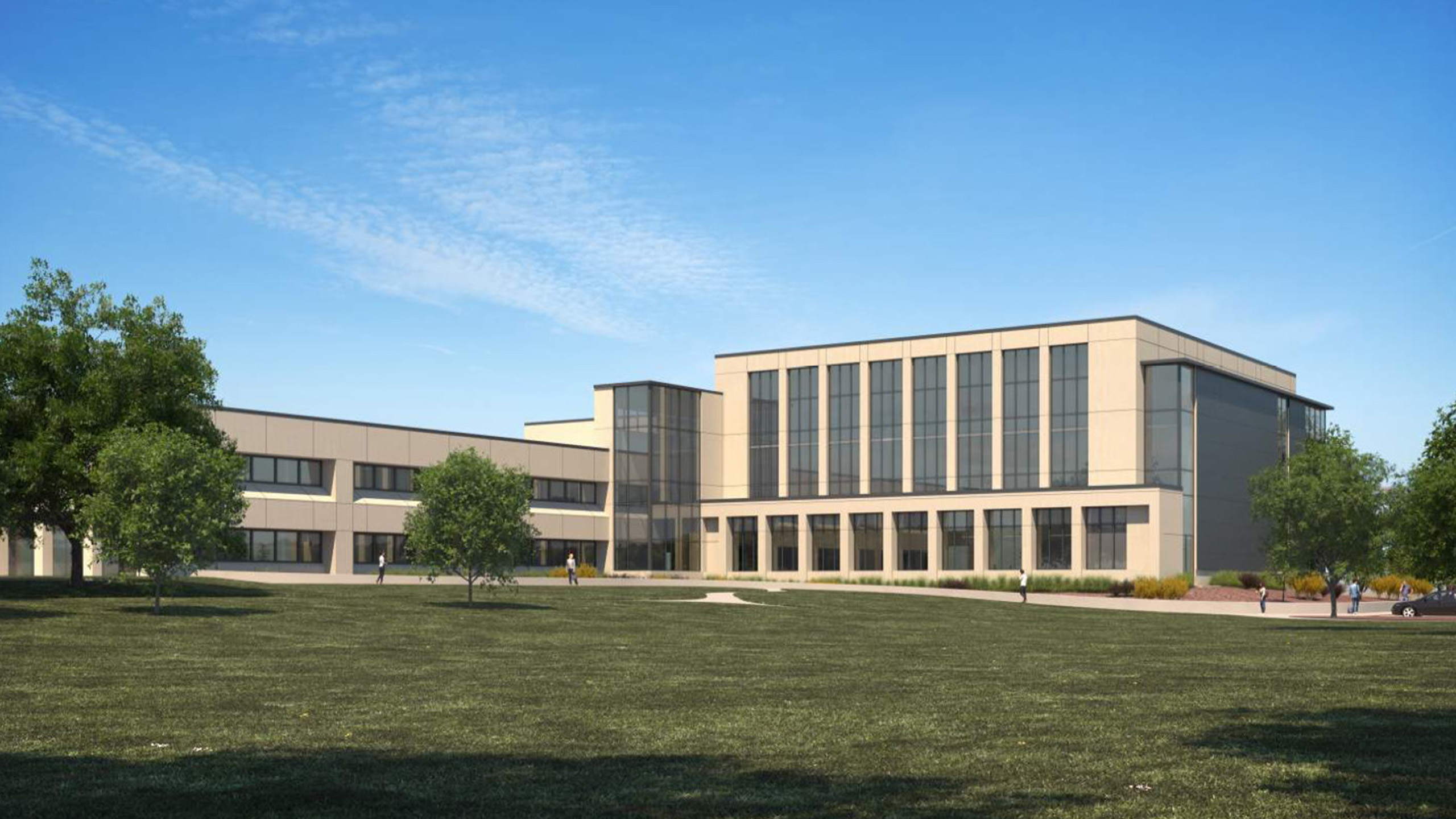
A new standard for justice architecture in Douglas County
For decades, the Douglas County Judicial & Law Enforcement Center (JLEC) has been the place where law and daily life intersect, often at pivotal and deeply personal moments. Whether arriving for jury duty, navigating a legal challenge, or seeking public services, every visitor forms an impression of the justice system the moment they walk through the door.
Originally constructed in 1974 and expanded in 2000, the facility no longer reflected the needs of a modern justice system. Security limitations, aging infrastructure, and evolving expectations around accessibility, technology, and user experience made it clear: Douglas County needed more than just an updated facility—it needed a rethinking of what courthouse design could be.
In 2025, the county broke ground on the largest capital improvement project in its history—an $82 million transformation that expands, renovates, and redefines the JLEC campus. As a leader in justice architecture, Treanor partnered with Douglas County and JE Dunn Construction to shape a solution rooted in collaboration, data, and a shared vision for the future.
A collaborative approach to complex courthouse design
From the outset, the project demanded care in both the design and construction process. The complexity of the facility—housing courts, law enforcement, emergency communications, and administrative services—required extensive coordination across disciplines and stakeholders.
Treanor recommended bringing a construction manager at risk (CMAR) on board early, allowing the team to evaluate operational needs, test multiple design scenarios, and provide real-time cost feedback. This approach empowered Douglas County to make informed decisions from day one, eliminating guesswork and aligning scope, budget, and vision before design began.
Over the course of a year, the team explored more than six potential pathways, leveraging lessons learned from similar courthouse projects to improve safety, efficiency, and long-term flexibility. The result is a carefully calibrated hybrid solution—one that balances immediate needs with future growth.

Expanding capacity while strengthening safety and efficiency
The final design introduces a comprehensive transformation of the JLEC campus through three primary components:
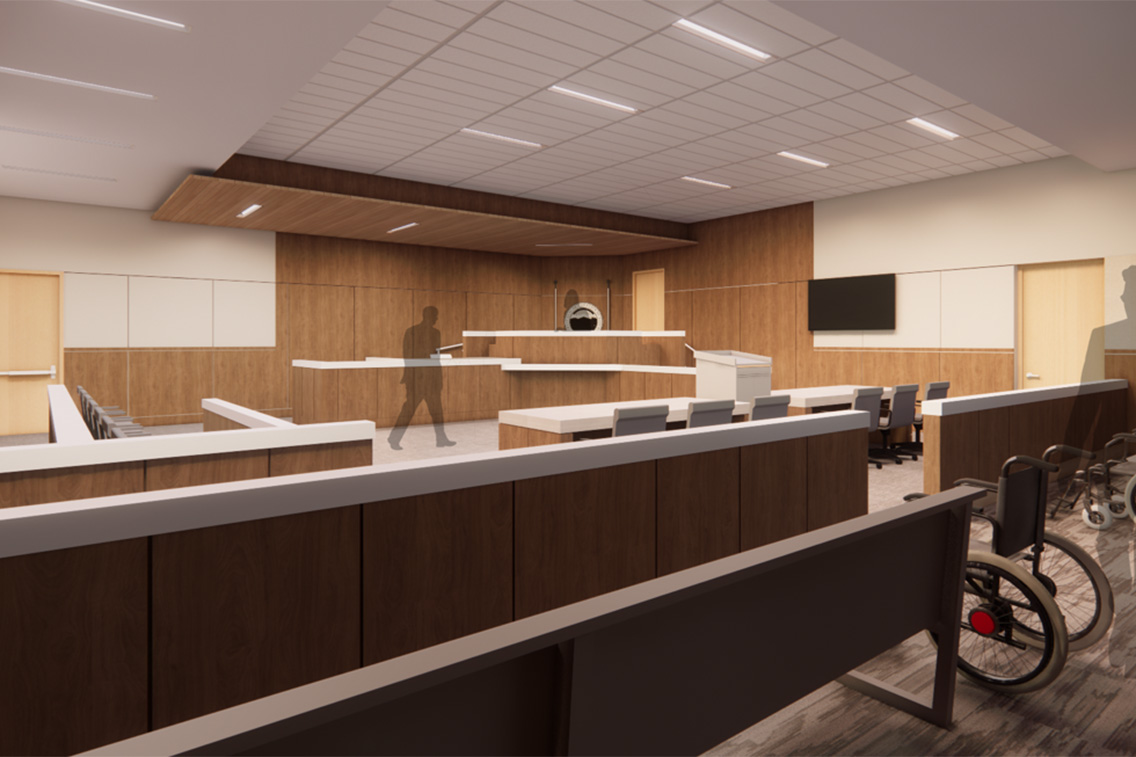
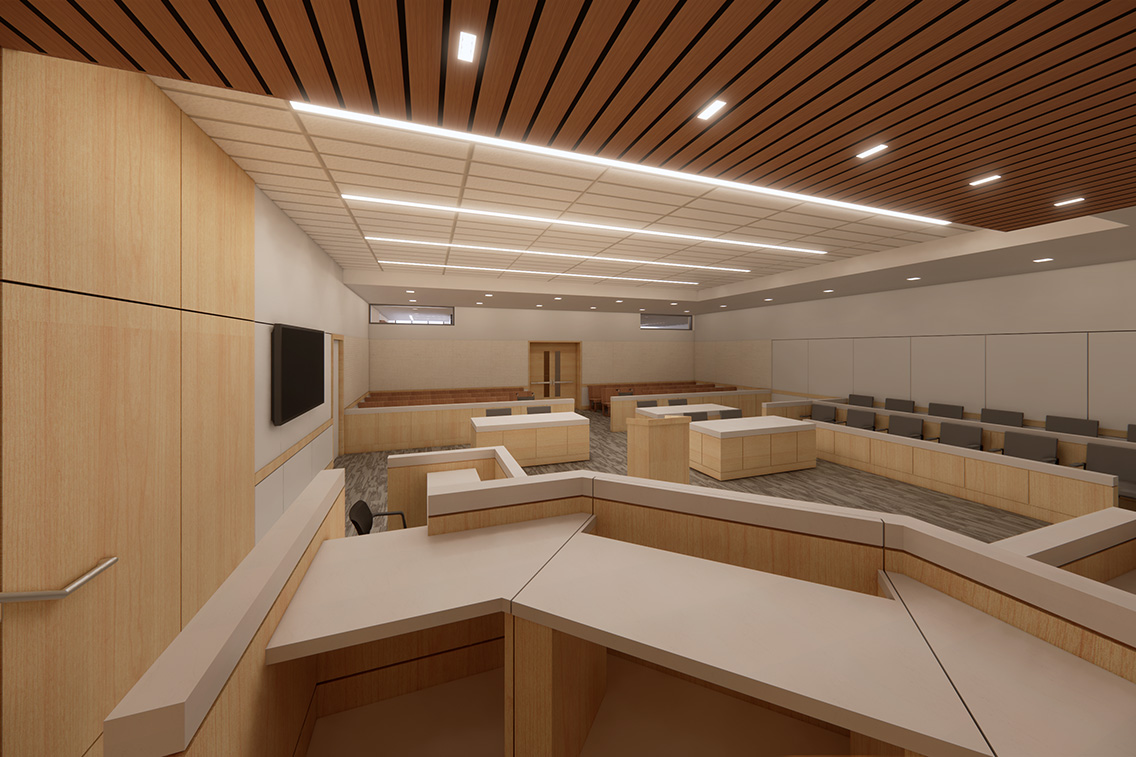
- A new addition housing modern courtrooms, judges’ chambers, and support spaces
- Renovation of the existing facility to improve accessibility, circulation, and user experience
- A new Public Safety Building serving as a central hub for law enforcement and emergency operations
At the heart of this transformation is a fundamental principle of courthouse design: separation of circulation. The updated facility provides distinct, secure pathways for the public, staff, and individuals in custody, enhancing safety while reducing stress and confusion for all users.
New courtrooms are equipped with advanced audio-visual systems to support evolving legal processes, while ADA-compliant upgrades provide equitable access throughout the building. Public-facing services, including the Clerk of the District Court and Law Library, are repositioned closer to the main entry, making them easier to find and use.
Adjacent to the existing jail, the new Public Safety Building will bring together the Sheriff’s Office, 911 dispatch, and emergency management under one roof. This co-location improves response times, strengthens communication, and creates a more resilient public safety infrastructure for the county.
Designing for human experience in justice spaces
Justice facilities are often perceived as cold, transactional environments—but they don’t have to be.
At Treanor, we approach justice architecture through a human-centered, trauma-informed lens. That means designing spaces that acknowledge the emotional weight people carry when they enter, and responding with environments that promote clarity, dignity, and calm.
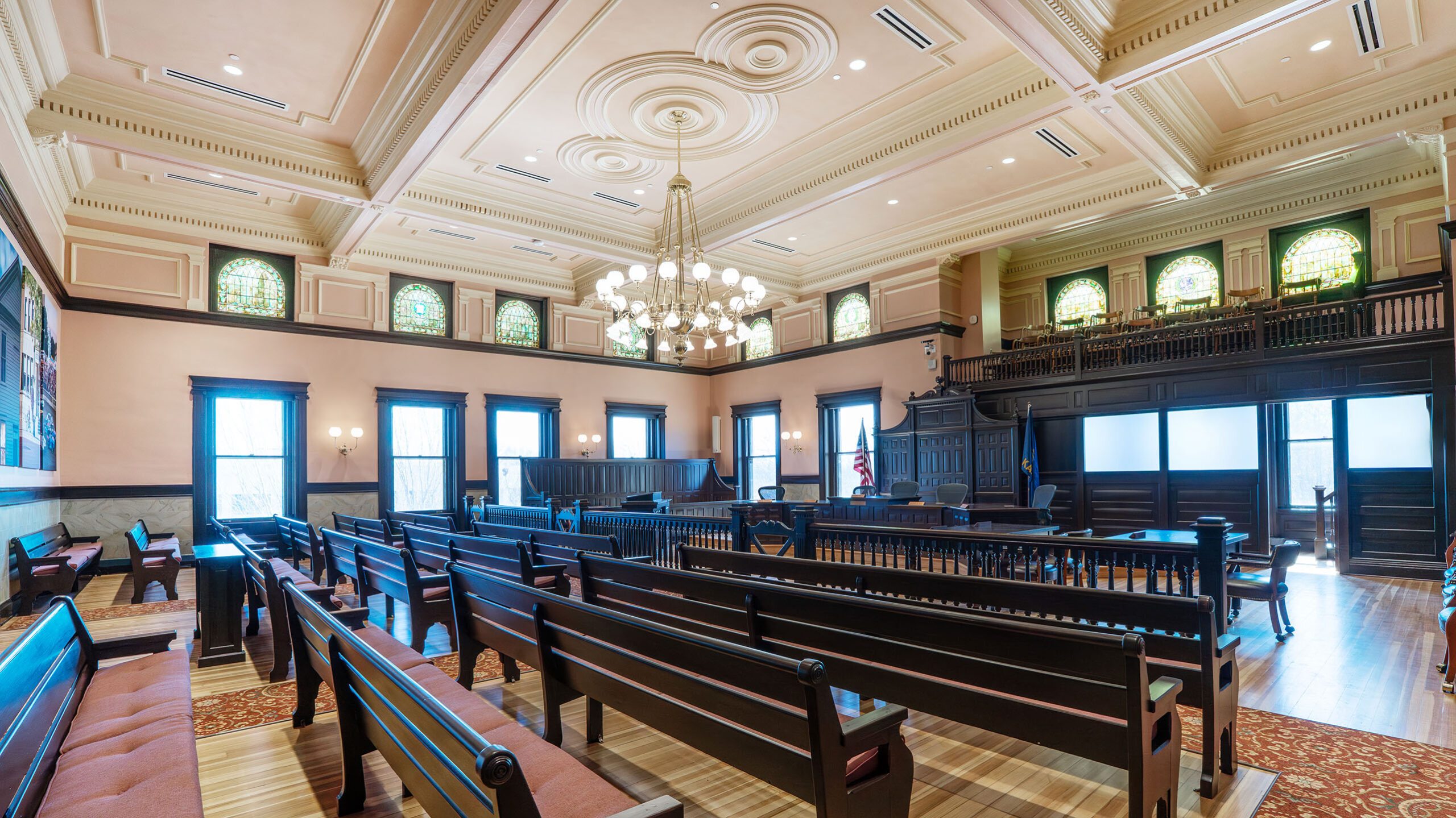
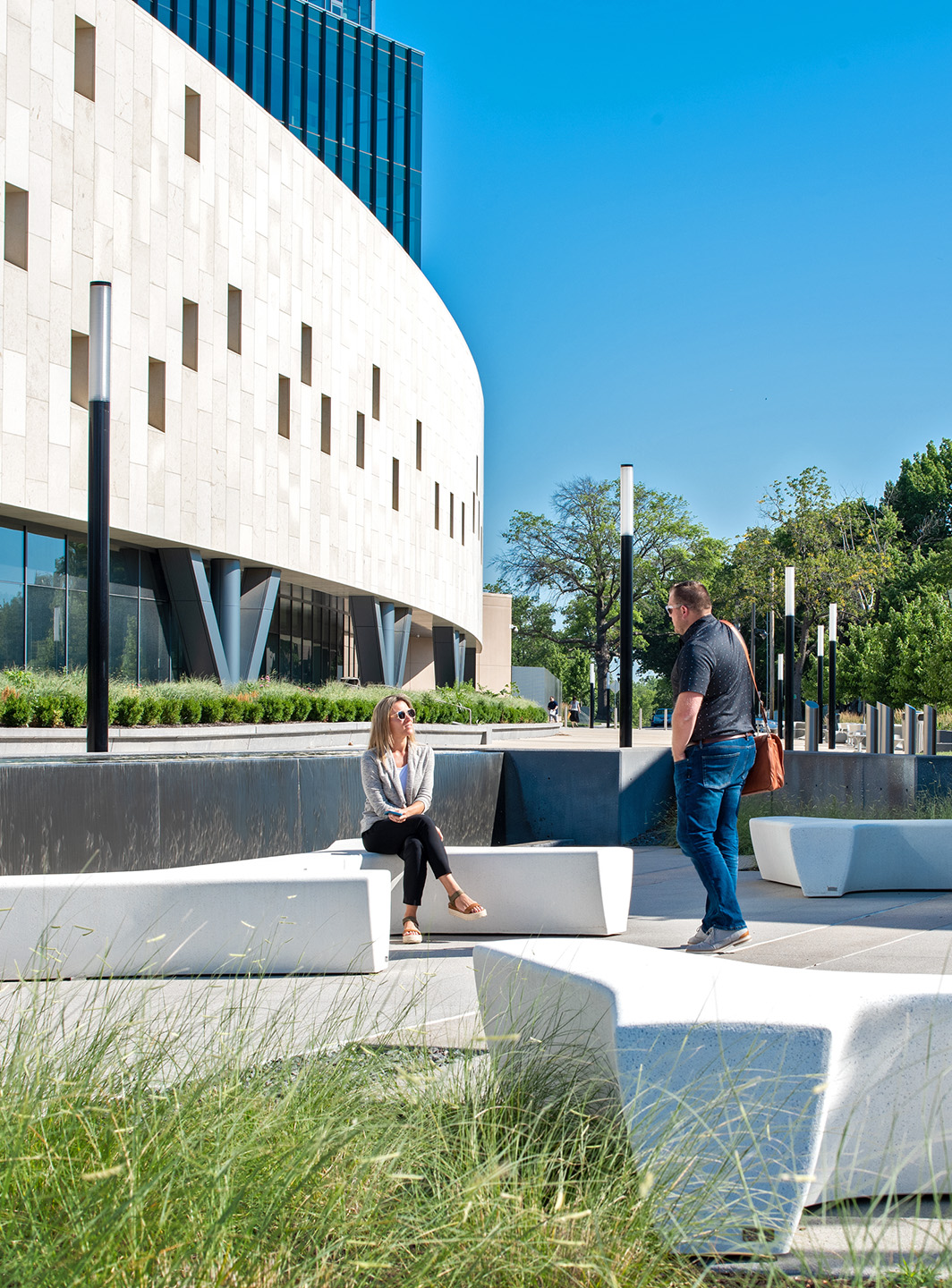
In the JLEC, this shows up in thoughtful material choices, improved natural light, and intuitive wayfinding. Clear circulation paths reduce uncertainty. Welcoming public areas shift the experience from “processing” to service. Technology is integrated in ways that enhance efficiency without removing the human connection at the core of the justice system.
Every day, people come into the Judicial Center who are having their first time experience. Whether they are dealing with issues that will have life-changing impacts for them, or to fulfill their obligation of jury duty . . . What they encounter when they walk into this building creates their first impression of the legal system and what happens here.
Chief Judge James R. McCabria

Building for resilience, growth, and community impact
The expanded campus allows for future growth within the court system, ensuring the facility can adapt alongside the community it serves. Integrated sustainability strategies, including rooftop solar panels, reflect the county’s commitment to responsible design and long-term performance.
More importantly, the project reinforces the role of civic architecture in shaping public perception. By creating a space that balances security with openness, efficiency with empathy, the JLEC becomes a place that supports fairness, accountability, and community wellbeing.
This expansion looks to the future . . . It is a reflection that this court and this community recognize the value of providing a place where the intersection of law into people’s lives occurs in an environment that can best support and promote the highest ideals of the judiciary for the people that it serves.
Chief Judge James R. McCabria
Making justice more accessible and human-centered
Every design decision in the Douglas County Judicial & Law Enforcement Center is grounded in a simple idea: justice should work better for people.
Through strategic planning, collaborative delivery, and a deep understanding of courthouse design, Treanor helped Douglas County create a facility that is safer, more efficient, and more human. It’s a place where systems function seamlessly—but more importantly, where people feel seen and supported.
Project contact

Related projects